
Chip specifications: the targets your samples are rated against
A chip sample only means something next to what the mill asked for. Is 2% pins a problem? It depends on the specification the load was bought against. When the targets live in a binder, a spreadsheet and somebody's memory, two people can read the same sample two different ways.
In The Chip Lab each mill's specifications are set up for that mill: its own quality formula, its own targets and limits, and its own calculated values. Each sample is tied to a specification, and the red values, the colored quality score and the alert lists across the app all read from it.
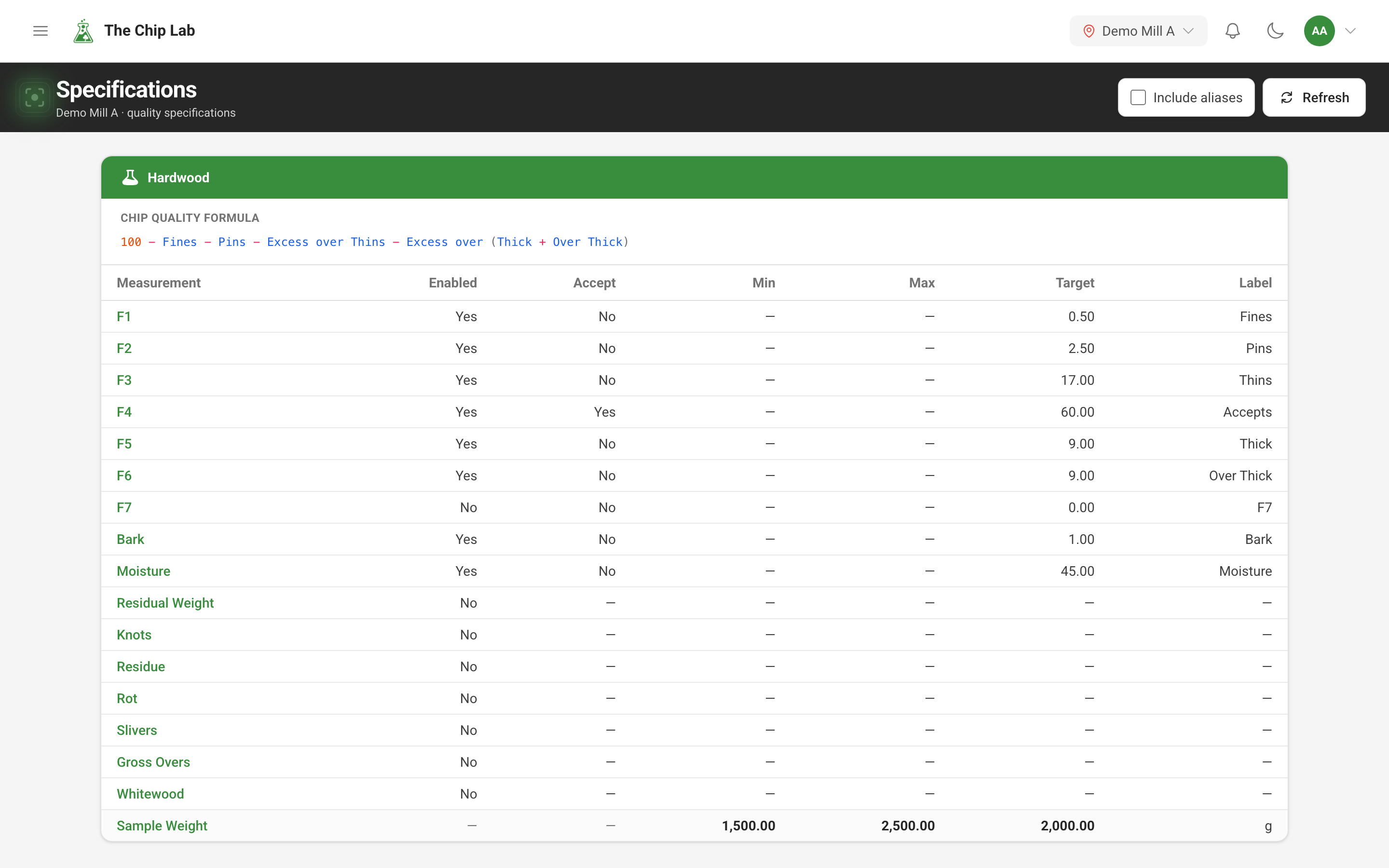
Where to find it
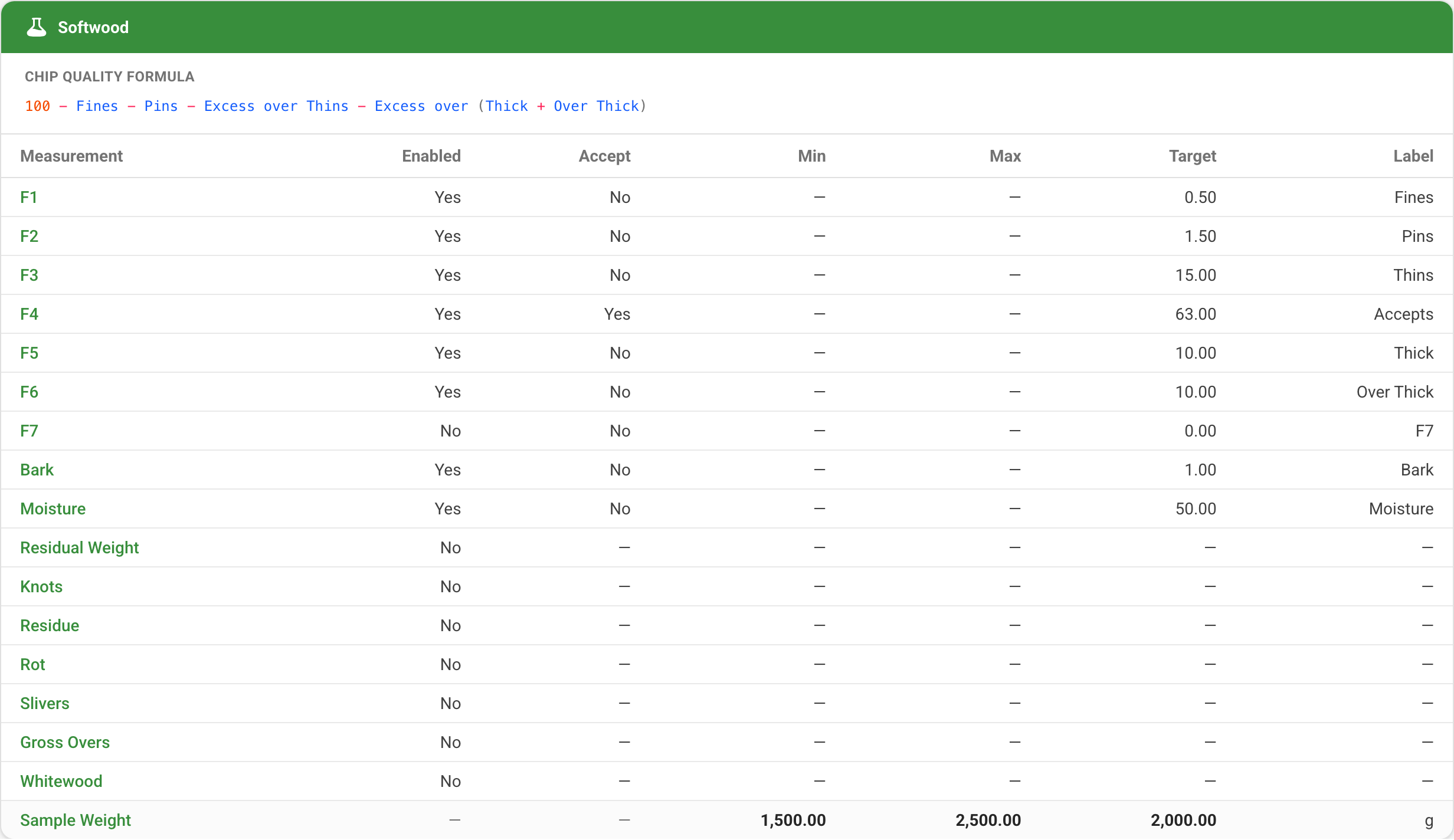
View Specifications sits in the main menu, below the quality reports. The page shows one card for each active specification at your mill, hardwood and softwood for example. Refresh reloads the cards, and Include aliases adds any alias specifications your mill keeps, marked Alias.
Built for your mill
Specifications are flexible, and The Chip Lab team sets them up and changes them with you.
- The quality formula. Each specification carries its own formula, shown at the top of its card as Chip Quality Formula. It defines how a sample's quality score is worked out from its measured fractions, so it can differ by specification and by mill. The demo specification pictured, for example, starts from 100 and takes off the fines and pins, plus any thin or oversized chips beyond their targets.
- Targets and limits. The fractions, bark and moisture each take a Target, a Min and a Max, and the score has its own target and minimum.
- What is recorded. Enabled sets which measurements are part of the specification, and Accept marks the fractions you want more of. Every other fraction is one you want less of.
- Your names. Label is the name your mill uses for each fraction, and the Samples grid uses it for its column headings.
- Sample size. Sample Weight, where set, gives the expected sample size and its unit.
- Calculated values. A specification can add values worked out from a sample's measurements by a formula of their own. They appear as columns in the Samples grid beside the measured values, can be used in filters, and are rated against their own target and minimum where those are set. Recoverable fiber, currently a preview, is one example.
- Supplier targets. Some suppliers can be held to their own targets (see below).
- Revisions. When a specification replaced an earlier one, a strip under its name says Supersedes, followed by the name of the one it replaced.
How a sample is rated
Each sample is scored against its own specification. Where the specification sets a target and a minimum for the chip quality score, the score is rated in three bands:
- On target: good (green).
- Short of the target but not below the minimum: ok (yellow).
- Below the minimum: poor (red).
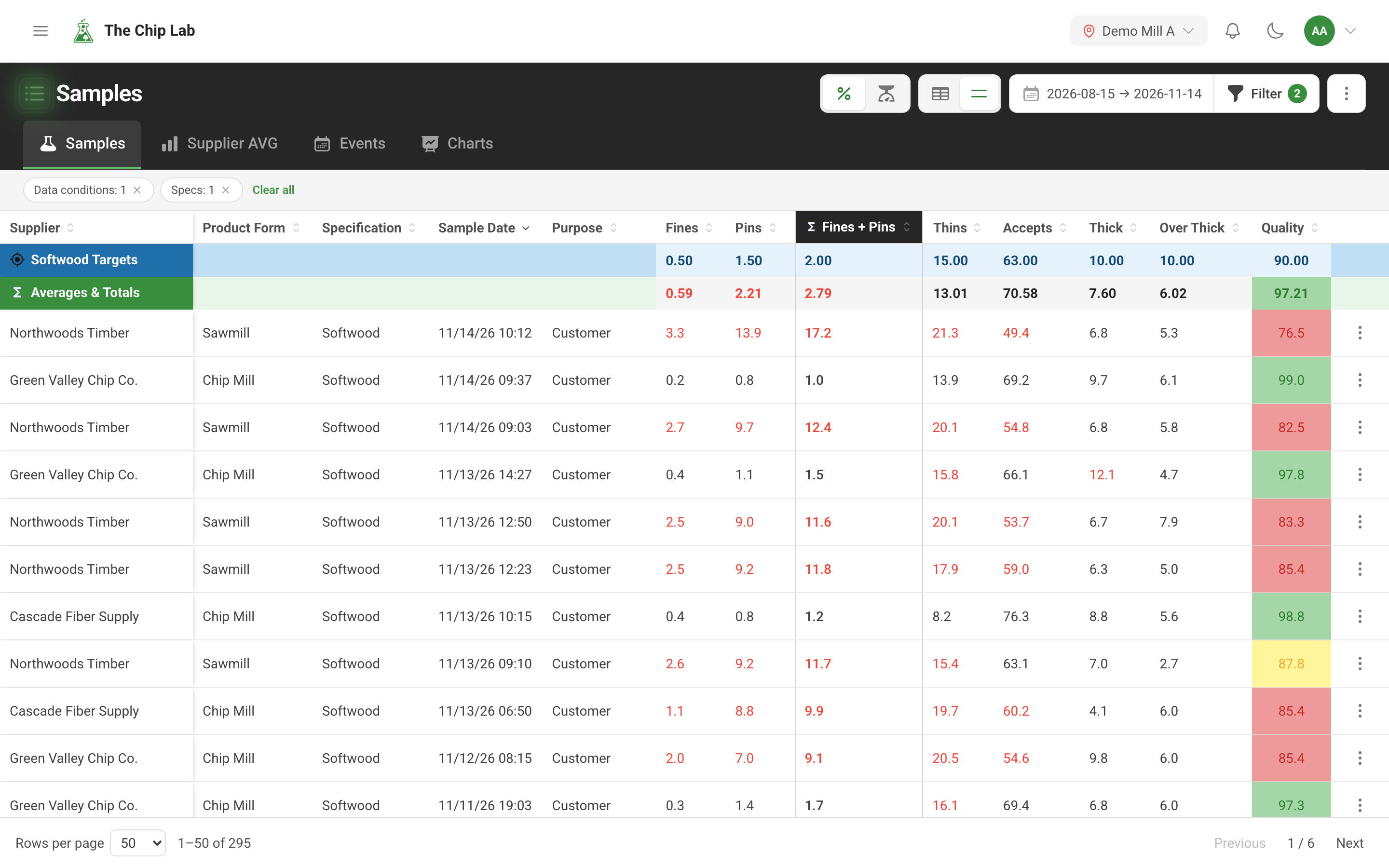
Averages are rated the same way. Single values are checked too: a value outside its specification's limits is shown in red. The Samples grid pins the specification's targets row at the top (Softwood Targets, for example).
Combined fractions
A combined-fractions condition in the Samples grid, such as fines plus pins, adds a Σ column showing the total. When its fractions are all accepts or all rejects and each has a target, the column's target is those targets added together. See Finding samples for how to build the filter.
Targets for particular suppliers
A mill may hold some suppliers to different targets than the rest, such as a separate aim for one source of chips. Where a supplier has its own targets, the Quality Overview Report shows a named Target row for it, with the adjusted values in bold.
Who can use it
Everyone with access to your mill can open View Specifications. The Chip Lab team creates and changes specifications with you, so your team's targets stay in one agreed place.
Read next
- Supplier chip quality against target: overview and alerts — suppliers read against these targets.
- Finding samples — filter chip history by the measured values, including against each sample's own specification target.
- How samples are reviewed and approved